
This post is brought to you by the Carabin Shaw Law Firm! Carabin Shaw is one of the leading personal injury law firms in Texas. They have extensive experience in accident cases, focusing on securing compensation for clients' medical bills, property damage, and pain and suffering.
Memorial Drive car accidents devastate Houston families along this historic corridor connecting downtown to Memorial Park and western neighborhoods, where the roadway's winding path following Buffalo Bayou creates dangerous curves combined with poor lighting, heavy tree canopy blocking sight lines, and drivers treating the scenic route as a high-speed shortcut despite residential driveways, joggers, and cyclists sharing the roadway. Our Houston car accident lawyers handle cases where Memorial Drive's character as both a commuter route and neighborhood street creates fundamental conflicts—drivers rushing between downtown and I-610 travel 50-60 mph on sections where speed limits are posted at 35 mph, yet Memorial Drive features frequent residential driveways, pedestrian crossings near Memorial Park, and curves that limit visibility to dangerous levels when vehicles travel at excessive speeds. The car accident lawyers in Houston at our firm who investigate Memorial Drive crashes discover that the roadway's tree-lined, parkway aesthetic creates false impressions that it's a safe, low-speed neighborhood street, yet traffic volumes and driver behaviors more closely resemble highway conditions where momentary inattention or slight speed miscalculations on curves result in vehicles crossing centerlines into oncoming traffic or leaving the roadway entirely and striking trees that line both sides. Our Carabin Shaw car accident lawyers Houston understand that Memorial Drive represents Houston's most dangerous example of parkway design gone wrong—what was intended as a scenic, leisurely drive has evolved into a high-speed urban artery where infrastructure never upgraded to match traffic demands, creating conditions where serious crashes occur with disturbing regularity despite decades of residents pleading for safety improvements. More information on our Houston car accident Lawyers here: https://www.carabinshaw.com/houston-car-accident-lawyers.html
According to Texas Department of Transportation crash data, Memorial Drive between downtown and Loop 610 recorded approximately 1,850 crashes between 2020 and 2024, resulting in 18 fatalities and 94 serious injuries along the approximately 8-mile corridor. These statistics translate to roughly one crash daily on Memorial Drive, with fatal accidents occurring every 12 weeks. Our Houston car accident lawyers recognize that nighttime crashes account for disproportionate shares of serious Memorial Drive accidents—approximately 45% of fatal crashes occur during evening and overnight hours despite nighttime representing only 35% of traffic volumes, demonstrating how inadequate lighting combines with curves and speeding to create deadly conditions after dark. The concentration of crashes on curved sections near Memorial Park, around the Shepherd Drive intersection, and on the downhill section approaching downtown demonstrates that specific design features rather than random chance cause Memorial Drive's elevated crash rates.
Memorial Drive developed over decades as Houston expanded westward, with the roadway following Buffalo Bayou's natural meandering path through what are now some of the city's most expensive neighborhoods. The decision to preserve the bayou's curves rather than straightening the roadway created Memorial Drive's distinctive character but also its dangerous geometry. Our car accident lawyers in Houston see how this history creates modern hazards: curves designed for 1950s traffic volumes and speeds become death traps when 21st century traffic volumes travel at modern speeds, tree growth over decades created canopies that block streetlights and moonlight making nighttime visibility terrible, and residential development along the corridor added countless driveways where vehicles enter and exit Memorial Drive directly without benefit of turn lanes or adequate sight distances. The roadway's role as a major commuter route means drivers familiar with Memorial Drive take risks that occasional users wouldn't—speeding through curves they've successfully navigated thousands of times before, yet statistics show that even experienced drivers crash when they misjudge speeds by just 5-10 mph on curves designed for lower velocities.
The section of Memorial Drive adjacent to Memorial Park features some of the roadway's sharpest curves as it winds through the park's southern edge. These curves, combined with heavy tree canopy and limited lighting, create conditions where drivers cannot see oncoming traffic or obstacles ahead until they're already committed to curves. Posted advisory speeds of 25 mph on these curves go ignored by drivers maintaining 45-50 mph.
Vehicles taking Memorial Park curves too fast drift across centerlines into oncoming traffic lanes, creating head-on collision scenarios. According to the National Highway Traffic Safety Administration, head-on crashes account for only 2% of all accidents but 10% of traffic fatalities due to combined impact forces when vehicles strike each other directly. Memorial Drive's curves see elevated head-on crash rates as speeding drivers lose control on turns.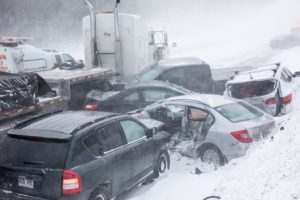
Large oak and pine trees line Memorial Drive's curves, positioned dangerously close to travel lanes. Vehicles that leave the roadway on curves strike these trees at high speeds, resulting in catastrophic injuries or deaths for occupants. The trees create fixed obstacles that offer no forgiveness—vehicles striking trees at 40 mph experience deceleration forces that crumple passenger compartments and cause severe trauma.
Memorial Drive's lighting infrastructure proves woefully inadequate for current traffic volumes and speeds. Many sections feature no streetlights, relying on moonlight and vehicle headlights for illumination. Heavy tree canopy blocks ambient light, creating darkness so complete that drivers cannot see pedestrians, cyclists, or disabled vehicles until they're dangerously close.
Trees arching over Memorial Drive create tunnel-like conditions where drivers experience visual compression—their peripheral vision darkens while focus narrows to illuminated pavement directly ahead. This tunnel vision reduces drivers' ability to detect hazards, judge speeds accurately, or maintain situational awareness. Research from the Federal Highway Administration shows that inadequate roadway lighting increases nighttime crash rates by 50-100% compared to properly lit roadways.
Excessive speed causes or contributes to the majority of Memorial Drive crashes. Drivers exceed posted 35 mph limits by 15-25 mph routinely, treating Memorial Drive as a faster alternative to congested parallel routes. Speed enforcement occurs sporadically, creating perceptions that speeding carries minimal risk of traffic stops. When crashes occur at these elevated speeds, injury severity increases dramatically.
Memorial Drive's topography creates sections where downhill grades allow vehicles to build speed without drivers actively accelerating. The section descending toward downtown gains elevation loss that pulls vehicles to 55-60 mph even when drivers believe they're maintaining reasonable speeds. This speed buildup on downhill sections combines with curves to create loss-of-control crashes.
Memorial Drive serves as a popular route for joggers and cyclists accessing Memorial Park trails. However, the roadway features minimal shoulders and no dedicated bicycle lanes, forcing cyclists to share travel lanes with vehicles traveling 50+ mph. Pedestrians crossing Memorial Drive to access park trails face extreme dangers as speeding traffic approaches from both directions.
Memorial Drive features few marked crosswalks along its length despite heavy pedestrian demand near the park. Pedestrians cross wherever convenient, often on curves where drivers cannot see them until it's too late to stop. These pedestrian crashes often prove fatal when vehicles strike at high speeds.
Residential driveways and business entrances line Memorial Drive continuously, creating constant conflict points where vehicles enter and exit. Drivers turning into or out of driveways must cross or merge with traffic traveling at speeds far exceeding typical residential street velocities. Left turns across Memorial Drive traffic prove particularly hazardous as drivers wait for gaps in both directions while traffic approaches at 50 mph.
Trees, hedges, and walls along Memorial Drive properties obstruct sight lines at many driveways. Drivers pulling out cannot see approaching traffic adequately, leading to crashes when they enter Memorial Drive's path misjudging approaching vehicle speeds or not seeing them at all until collisions occur.
Where Memorial Drive intersects Shepherd Drive near River Oaks, high crash rates result from complex turning movements, heavy traffic volumes, and drivers rushing through yellow lights. This intersection handles over 40,000 vehicles daily, with multiple lanes in all directions creating confusion about right-of-way and proper turning procedures.
If you suffered injuries in a Memorial Drive accident, you deserve full compensation for medical expenses, lost wages, and all damages. Liability may involve negligent speeding drivers, government entities that failed to improve lighting or address known hazards, or property owners whose landscaping created dangerous sight obstructions. Our Carabin Shaw Houston car accident lawyers understand Memorial Drive's unique dangers and fight for maximum compensation. Call 800-862-1260 today for a free consultation with our car accident lawyers in Houston.